

Just like with traditional money, you need wallets to secure your digital assets. So, if you are also investing in virtual money, one thing you definitely need is a Bitcoin wallet. It is important to keep your assets safe from online threats.
In this guide, we explore what Bitcoin wallets are, how they work, their different types, and how to choose a wallet wisely. You will also learn the best Bitcoin wallets in 2026 that you need to buy.
Key Takeaways
- Bitcoin wallets do not store coins; they store private keys.
- Choosing self-custody wallets gives you complete ownership but also requires you to take responsibility.
- Hardware wallets are best for long-term Bitcoin security.
- Seed phrase protection is even more important than wallet security because it allows you to recover all your assets.
What is a Bitcoin Wallet?
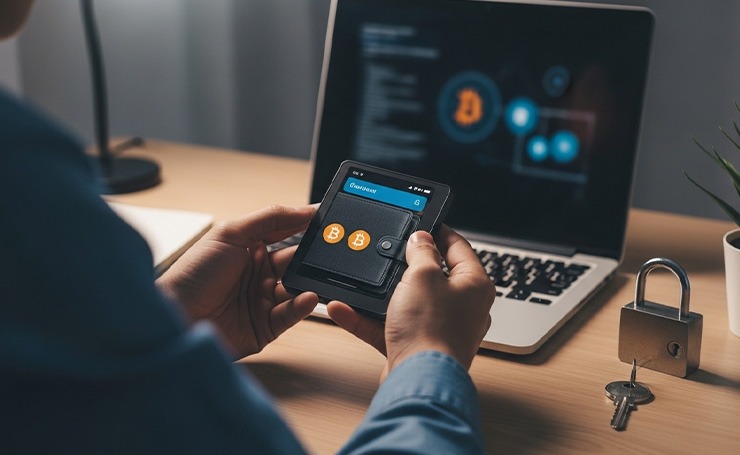
A BTC wallet is a software application or hardware device that allows you to keep your Bitcoin safe. Just like a physical wallet in which you keep your traditional money, a Bitcoin wallet allows you to keep your virtual currency.
Bitcoin is stored on a public ledger called blockchain. Your wallet interacts with it to enable you to manage all your digital funds. Each wallet has its own digital keys: one public and one private key. You share the public key with others to receive Bitcoin and keep the details of the private key to yourself because it allows you to spend your Bitcoin.
How a Bitcoin Wallet Works
This is how Bitcoin wallets function.
Managing Keys and Ownership
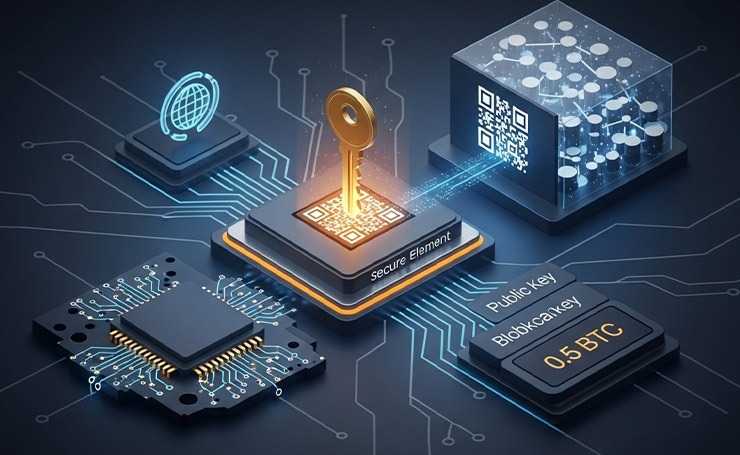
Your wallet has two cryptographic keys. The public key is just like the account number that you share with others to receive Bitcoin. The private key is like your ATM pin. You should never share it, as it provides you with ownership of your funds.
Another important thing to remember is the seed phrase. When you create a wallet, it generates a seed phrase (also called a recovery phrase). This phrase restores your wallet on a compatible device and provides full access to Bitcoin. If you lose it, no one can recover your Bitcoin. So store it offline, as it should never be shared.
Facilitating Blockchain Transactions
Apart from ownership, wallets are also used in transactions. When you send Bitcoin, you use the wallet to initiate this transfer. This transaction is sent to the network, verified by miners, and recorded on the blockchain. If you receive Bitcoin, your wallet gets updated once the blockchain verifies the transaction.
Types of Bitcoin Wallet
Every type of Bitcoin wallet comes with its own features and level of security.
Hot Wallets (Online Bitcoin Wallet)

Hot wallets are connected to the internet. They are convenient but carry a higher risk of online threats such as malware, phishing, and hacking.
Cold Wallets (Offline Bitcoin Wallet)
Cold wallets keep private keys offline, away from internet access. This makes cold wallets the safest option to secure Bitcoin.
Hardware Wallets
These wallets are physical devices that store your private keys offline. They are identical to cold wallets, but there is a difference. Cold wallets are any wallets that store your virtual currency offline. On the other hand, hardware wallets are physical, USB-like devices used to sign transactions offline.
Software Wallets
There are three types of software wallets.
- Desktop Wallets: These are installed on your computers, providing you with complete control over your funds and keys.
- Mobile Wallets: These are apps on your mobile phones. You can use them for on-the-go transactions or spending Bitcoin in physical stores.
- Web Wallets: These are conveniently accessible through internet browsers. They are, however, less secure due to online threats.
Paper Wallets
A paper wallet is simply a printed copy of private keys or seed phrases in the form of QR codes. While they are offline and safe from any online threats, paper wallets
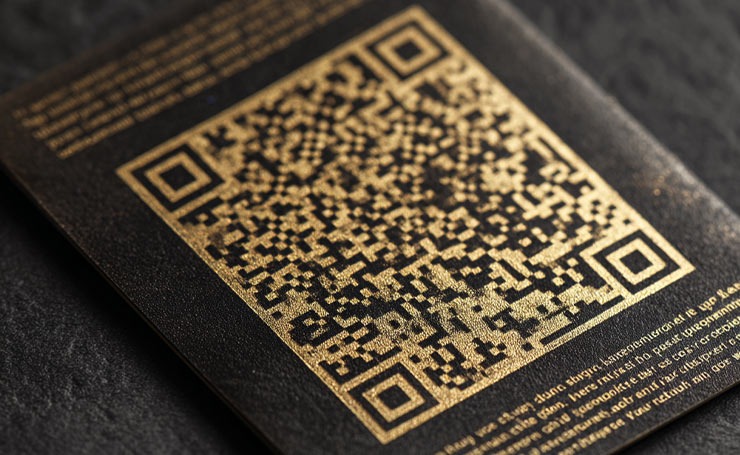
- Are easy to lose and damage
- Are prone to human error
- Are outdated compared to hardware wallets
Custodial vs Non-Custodial Wallets
| Aspect | Custodial Bitcoin Wallet | Non-Custodial Bitcoin Wallet |
| Who controls private keys | Third party (exchange or service) | You (the user) |
| Bitcoin ownership | You have a claim, not full control | You fully own and control your BTC |
| Self-custody | No | Yes |
| Seed/recovery phrase | Not provided to the user | Fully controlled by the user |
| Security responsibility | The platform handles security | User is responsible for security |
| Risk of exchange hacks | High | None (keys stored by user) |
| Online storage risks | High (always online) | Low to none (especially cold wallets) |
| Censorship resistance | Low (accounts can be frozen) | High (no third-party control) |
| Ease of use | Very easy (beginner-friendly) | Moderate (requires learning) |
| Transaction approval | The platform approves transactions | User signs transactions directly |
| Best for | Short-term holding, trading | Long-term holding, self-custody |
| Offline storage support | No | Yes (hardware & cold wallets) |
| Failure risk | Platform shutdown means fund loss | Only user error can cause loss |
| Bitcoin-only focus | Often mixed with other assets | Can be Bitcoin-only |
| Recommended for serious Bitcoin holders | No | Yes |
How to Choose the Right Bitcoin Wallet
Choosing the right wallet depends on different factors. Let’s explore them in this section.
Security
Keep security at the top of your list when choosing a Bitcoin wallet. A protected wallet has strong encryption and uses different safety protocols to keep your funds secure. See if the wallet you select has the following.
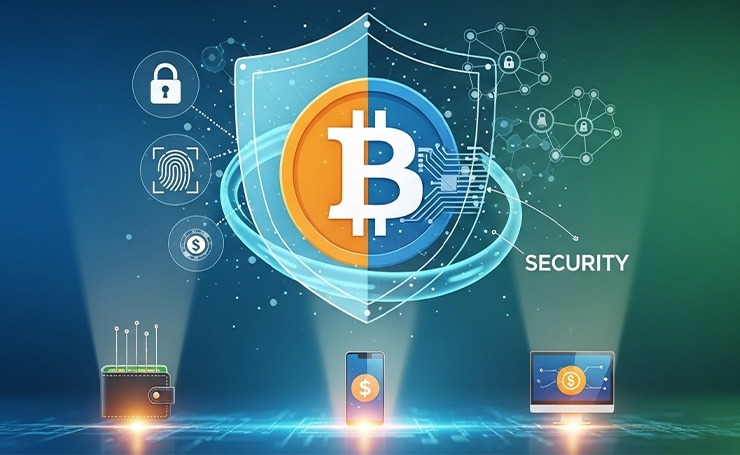
- Encryption transforms your private information into a code to keep it safe from unauthorized access.
- Multi-signature support that allows multiple people to approve a transaction before it goes through. It is ideal for joint or business accounts.
Ease of Use
A user-friendly wallet is as important as security, because navigating a complex wallet can lead to costly mistakes. If you are a beginner in the crypto world, invest in a wallet that is easy to use and has clear instructions about how to use its features.
Lifestyle
The right Bitcoin wallet is the one that suits your everyday routine. Make sure it is compatible with your device, whether a smartphone or a computer, and accepted by merchants.
Recovery Options
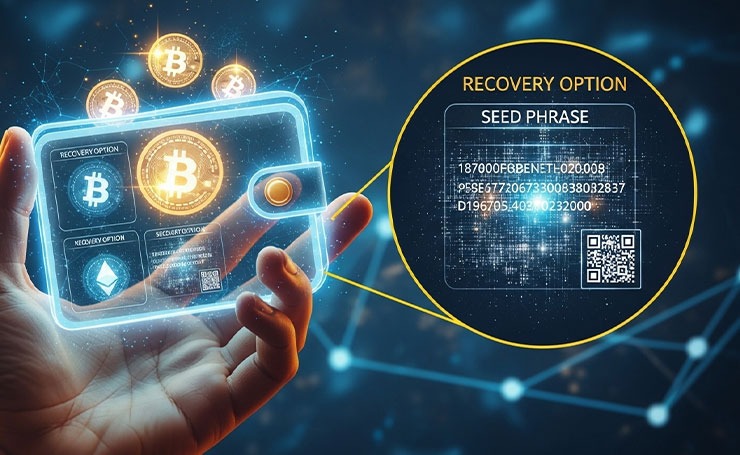
Choose a wallet with easy-to-follow backup and recovery options so that, even if an accident occurs (a computer crash or phone loss), you can retrieve your funds.
Customer Support
Always choose a crypto wallet that has a responsive customer support team. Moreover, read other users’ reviews to see the wallet’s reputation in the community.
Best Bitcoin Wallets in 2026
These are some of the best Bitcoin wallets for 2026.
Best Hardware Wallets
- Ledger Nano X
- Trezor Safe 5
- Coldcard Q
Best Mobile Bitcoin Wallets
- Phoenix Wallet
- BlueWallet
- Zeus Wallet
Best Desktop Wallets
- Sparrow Wallet
- Eletrum
- Specter Desktop
Best Cold Storage Options
Hardware Wallets
- Coldcard Mk4/Q
- NGRAVE ZERO
- Keystone 3 Pro
Air-gapped Systems
- ELLIPAL Titan 2.0
- Tangem Wallet
- Cypherock X1
| Wallet | Category | Type | Connectivity | Best For | Key Feature |
| Ledger Nano X | Hardware | Cold (Secure Element) | USB-C, Bluetooth | Secure storage and mobile use | Wide asset support |
| Trezor Safe 5 | Hardware | Cold (Secure Element) | USB-C | High security and usability | Touchscreen, passphrase |
| Coldcard Q | Hardware | Cold (Air-gapped) | USB, NFC, microSD | Bitcoin-only security | Advanced anti-exfil |
| Coldcard Mk4 | Hardware | Cold (Air-gapped) | USB, microSD | Advanced BTC users | PSBT support |
| NGRAVE ZERO | Hardware | Cold (Air-gapped) | QR only | Maximum cold storage | EAL7 secure chip |
| Keystone 3 Pro | Hardware | Cold (Air-gapped) | QR | Multisig setups | Offline QR signing |
| ELLIPAL Titan 2.0 | Hardware | Cold (Air-gapped) | QR | Fully offline storage | Anti-tamper design |
| Tangem Wallet | Hardware (Card) | Cold (NFC) | NFC | Simple cold storage | Card-based key |
| Cypherock X1 | Hardware | Cold | NFC, USB-C | Seedless backup | Shamir Secret Sharing |
| Phoenix Wallet | Mobile | Hot (Non-custodial) | iOS, Android | Lightning payments | Automatic channel mgmt |
| BlueWallet | Mobile | Hot (Non-custodial) | iOS, Android | BTC and Lightning | Multisig support |
| Zeus Wallet | Mobile | Hot (Non-custodial) | iOS, Android | Node users | Connect to own node |
| Sparrow Wallet | Desktop | Hot (Non-custodial) | Windows, macOS, Linux | Privacy control | Advanced coin control |
| Electrum | Desktop | Hot (Non-custodial) | Windows, macOS, Linux | Lightweight BTC use | Long track record |
| Specter Desktop | Desktop | Hot (Non-custodial) | Windows, macOS, Linux | Multisig and hardware | Node integration |
Common Bitcoin Wallet Mistakes
Avoid these pitfalls when using a Bitcoin wallet.
- Storing seed phrases in cloud storage
- Screenshotting recovery phrases
- Keeping large amounts of BTC in hot wallets
- Downloading fake wallet apps
- Ignoring software updates
Best Security Practices for BTC Wallets
Security has become the biggest concern with the popularity of Bitcoin. Therefore, you should implement the following best practices to secure your virtual funds from hacking or phishing.
- Never ignore wallet software updates to secure it from vulnerabilities.
- Use strong, unique passwords for wallet accounts and change them frequently.
- Use two-factor authentication for more security.
- Keep backups of your wallet in secure locations.
- Be aware of phishing attempts and download wallets only from reliable sources.
Conclusion: Which Bitcoin Wallet Should You Buy?
If you have small amounts of virtual currency and transact them often, a mobile wallet is suitable. For long-term holders and serious investors, using a hardware wallet or cold storage setup is the safest option.
For more interesting crypto-related information, feel free to visit The Crypto Trends.
FAQs
What is the Safest Wallet to save Bitcoin for the long term?
Hardware wallets like Trezor and Ledger are considered the safest for long-term Bitcoin storage because they keep private keys offline.
Should I have a Non-custodial Wallet or Exchange Wallet?
A non-custodial wallet is better because it gives you complete control over your private keys and Bitcoin. Exchange wallets are convenient, but they expose you to platform risks, such as hacks.
Do I lose my Bitcoin if I lose my Wallet Device?
No, you do not lose your Bitcoin as long as you have your seed phrase. It helps you restore your wallet on any compatible device.
Are Mobile Wallets Safe to Use?
Mobile Wallets are convenient for daily transactions and storing small amounts of Bitcoin. However, it is not the safest option due to the risk of online exposure.
