

20-Second Summary
The NFT space has evolved from speculative hype into a legitimate income opportunity. We explore five core methods:
- NFT flipping involves buying undervalued NFTs and selling them at higher prices using rarity ranking tools (popular with Bored Ape Yacht Club traders).
- Creating and selling NFTs on platforms like OpenSea generates income from both initial sales and secondary sales through smart contracts.
- You can create passive income by holding digital assets with NFT staking and NFT royalties.
- With Gaming NFTs, one earns rewards through mechanics.
- Virtual lands are a long-term investment.
For success, you will need blockchain technology understanding, strong NFT community engagement, and crypto wallet security. The NFT market rewards successful NFT projects with genuine utility over pure speculation, making research and patience your most valuable assets in making money with NFTs.
NFT Introduction, History, and Current Impact
Back in 2021, NFT was something people were talking about like crazy. They were buying pictures of even monkeys for millions of dollars, but that has not stopped them. Today, this has become a much bigger story.

Fast forward to 2026, and the NFT space has completely changed. It’s not just about hype and crazy prices anymore. Today, real people are making real money from NFTs through smart strategies and patient planning.
- Some are flipping digital assets for quick profits.
- Others are creating art and earning money over and over through something called royalties.
- And many are just holding NFTs and getting paid passive income while they sleep.
You don’t need to be a tech expert or have millions to start.
In this guide, we will show you five proven ways to make money with NFTs in 2026. We’ll talk about the real profit potential, how long it actually takes to make money, and most importantly, how to avoid the scams and mistakes that waste people’s time and money.
What Are NFTs and Why Does the NFT Market Matter for Income Generation?
Before we talk about making money, let’s get on the same page about what NFTs actually are.

NFT stands for non-fungible token. Think about money. If I give you one dollar and you give me one dollar, we’ve made a fair trade, right? Those dollars are the same. They’re fungible, which means that they are interchangeable. One Bitcoin equals one Bitcoin. They’re identical.
But NFTs are different. They’re unique. NFT is just like digital trading card or a digital painting. No two NFTs are identical, just like an original Picasso painting can never be replicated. Each one is unique.
Here’s where blockchain technology comes in. Blockchain is like a permanent record book that sits on thousands of computers around the world. When you own an NFT, that ownership is recorded on the blockchain forever. Nobody can fake it or steal it.
Why does the NFT market matter for making money?
Because people want to own unique digital items. Some want digital art. Some want virtual land. Some want gaming characters. And because these digital assets are rare and unique, they have value. And where there’s value, there’s opportunity to make money.
The key thing about 2026 is that the NFT market has matured. We’ve moved past the “buy any monkey picture and hope it goes up” days. A successful NFT project isn’t just pretty to look at. It gives you something real in return for owning it.
Understanding NFT Investments Before You Buy and Trade NFTs
NFT investing is risky. We are telling you this upfront as this is the truth.

The NFT market is highly speculative, which means prices can go crazy up or down based on emotion and trends, not just logic.
Before you invest any money, you need to know a few things:
- First, how much money should you be prepared to lose? Only invest money you can afford to lose without stress.
- Second, understand that NFT investing takes real time and effort. You can’t just buy something and expect to make money. You need to research projects, understand the community, study trends, and stay on top of market changes. If you’re not willing to put in that work, this probably isn’t for you.
- Third, know that market volatility is normal. You might buy an NFT for $500, watch it go to $2,000, and then see it drop to $100 the next week. Can you handle that emotional roller coaster? If not, maybe choose a more stable income method like staking.
Yes, these seem quite straightforward points, but this does not mean that you cannot make money with NFTs. You definitely can once you understand it completely and have the patience.
Why Strong NFT Communities Are Your Best Friend
Here’s something that separates winners from losers in the NFT space: community strength.

- If an NFT project has an active, engaged community, that’s a really good sign. A strong community means people believe in the project. They talk about it on social media platforms like Twitter and Discord. They help each other out. They create excitement.
- When you’re researching an NFT project, always check out its Discord server. Is it active? Do people seem genuinely interested, or does it feel dead? Are there thousands of members, or just a handful?
Communities create demand, which creates higher prices. That is why you need to look for stronger communities in NFT that are talking about a project in online spaces.
NFT Flipping: Buy Undervalued NFTs and Sell High for Quick Profit
Let’s talk about the fastest way to make money with NFTs: flipping.
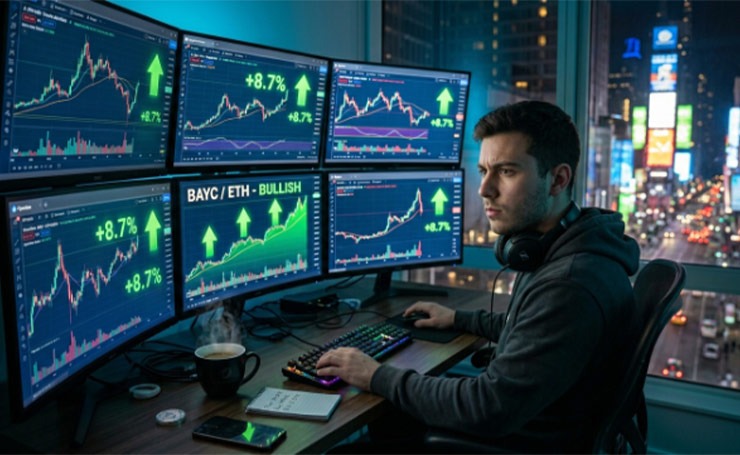
NFT flipping is exactly what it sounds like. You buy an NFT when the price is low. Then you wait. When the price goes up, you sell it for a profit. The difference between what you paid and what you sold it for is your profit.
Here’s a simple example:
- You find an NFT from an up-and-coming project selling for 2 ETH (which is around $6,000)
- You do your research and believe this project has real potential
- You buy it
- Over the next 3 months, the project becomes more popular, and the floor price (the lowest price anyone is selling at) goes up to 5 ETH
- You sell your NFT for 5 ETH
- You just made 3 ETH profit, which is about $9,000 profit
Of course, it’s not always that clean. Sometimes prices go down instead of up. That’s why research is so important.
The key to successful flipping is finding undervalued NFTs, thedigital assets that the market hasn’t fully appreciated yet. This is where rarity ranking tools come in.
Using Rarity Ranking Tools to Find Valuable NFTs
Imagine you’re looking at 10,000 NFTs in a collection. They all look similar, but each one is slightly different. Some might have rare backgrounds. Some might have special items. How do you know which ones are actually valuable?

That’s where rarity ranking tools come in. Tools like Rarity tools, Rarity Sniper, and TraitSniper automatically analyze every NFT in a collection and rank them by rarity. The rarest NFTs usually sell for higher prices.
Here’s how you use them:
- Go to the rarity tool website
- Enter the NFT collection name
- The tool shows you all 10,000 NFTs ranked by rarity (the rarest at the top)
- Look for NFTs that are super rare but selling at low prices (compared to other rare ones)
- Those are potentially undervalued, but good flipping candidates
Why does rarity matter? Because collectors want rare items. If there are 10,000 ninja characters and only 50 of them are gold ninjas, the gold ninjas are worth way more.
By using rarity ranking tools, you can spot deals that other people miss. That’s how you make money flipping.
NFT Trading Strategies That Beat the Market
Successful flipping isn’t just about finding rare items. You also need a smart strategy.

Strategy 1: The Drop Strategy
- When a new NFT collection launches (this is called an NFT drop), prices are usually at their lowest right after launch. Smart traders buy on day 1, then sell on day 7-14 when excitement peaks.
- Many new projects see 3-5x price increases in the first two weeks if they have hype behind them.
Strategy 2: The Trend Spotting Strategy
- Watch what’s trending. Is pixel art coming back? Are gaming NFTs hot right now?
- When you notice a trend starting to heat up, find the best projects in that category and buy before everyone else jumps on them.
Strategy 3: The Long Hold Strategy
- Some traders aren’t really traders. They’re investors. They find amazing projects from legendary creators like the Bored Ape Yacht Club artists, buy them, and hold for years.
- Patience in the NFT market often pays off big time.
The traders who make consistent money are the ones who stick to their strategy, do thorough research, and don’t panic sell when prices dip.
Create and Sell Your Own NFTs: From Digital Creation to Secondary Sales
You don’t have to flip other people’s NFTs to make money. You can also create your own.

You can create digital assets and turn them into NFTs. This could be digital art, photography, 3D designs, music, animation, or literally anything digital that people might want to own.
You can make money not just once, but multiple times from the same creation through something called secondary sales.
The Complete Process: From Creation to Selling on OpenSea
Let us walk you through thefive steps journey:
- Create a digital file you want to sell, such as art, photos, music, 3D designs, or AI-generated images that people would want to buy.
- Choose an NFT marketplace like OpenSea because it is easy to use and suitable for beginners.
- Set up a crypto wallet such as MetaMask to store cryptocurrency and connect it to the marketplace.
- Upload your digital file to the marketplace, add details, set a price, pay the required fee, and mint it on the blockchain.
- List your NFT for sale at a fixed price or auction and set a royalty percentage to earn money from future resales.
NFT Marketing Tips to Build Demand for Your Digital Assets
Here’s the thing: if nobody knows your NFT exists, nobody will buy it. You need to market your work. But don’t worry, you don’t need a huge budget. Here’s what actually works:
- Use Twitter to share your art regularly. Comment on other artists’ posts. Join NFT communities. Use trending hashtags. Be authentic and helpful to others.
- Create a Discord server and invite your followers. Use it to share exclusive sneak peeks, behind-the-scenes content, and updates. This creates a loyal community that will buy from you.
- Find micro-influencers in the NFT space (people with 5,000-50,000 followers) and see if they’d be interested in featuring your work. Sometimes a simple retweet can change everything.
- Create Exclusive Content and offer holders of your NFTs special benefits. Maybe they get access to a private Discord channel, early access to new drops, or exclusive content. This makes people actually want to own your NFTs.
Marketing your NFTs is like marketing anything else. You need to show up, be consistent, and give people reasons to care about what you’re creating.
NFT Royalties and Staking: Generate Passive Income While You Hold
There are two main ways to make money while you sleep with NFTs: royalties and staking.

We already talked a bit about royalties. If you create an NFT and set a 10% royalty, every time someone resells that NFT (in the secondary market), you automatically get 10% of the sale price. No work required on your part. It just happens.
But here’s the thing: not every marketplace honors royalties. OpenSea does. Rarible does. But some newer platforms might not. Always check before you launch.
NFT Staking: Earn Rewards by Holding Valued NFTs
Staking is different. Staking means you hold an NFT (or multiple NFTs) in your wallet, and the blockchain rewards you with tokens or cryptocurrency just for holding it.
Here’s how it works in simple terms:
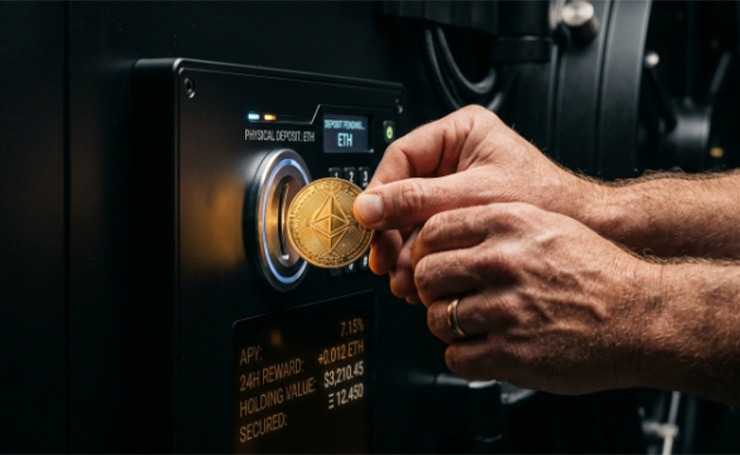
Imagine you buy an NFT from a project that offers staking rewards. You hold it in your wallet for a specified period (could be 30 days, 90 days, or even a year). At the end of that period, the project sends you cryptocurrency as a reward. Maybe they send you Ethereum. Maybe they send you their own custom token that you can sell.
Some staking programs offer annual rewards of 5-25%. That means if you’re holding $10,000 worth of NFTs, you could make $500-$2,500 per year just by holding them. That’s pretty passive income.
The risk? The blockchain technology behind staking is complex. Sometimes smart contracts (the code that automates staking) have bugs or get hacked. So only stake with projects you really trust.
The best way to start staking is to find an established project with a good track record. Look for projects that have been around for 2+ years and have transparent developers.
Alternative Passive Income: Fractional Ownership and Beyond
Here’s a newer concept in the NFT space: fractional ownership.

Let’s say an amazing NFT is worth $100,000. Most people can’t afford to buy the whole thing. So some platforms let you buy a fraction of it. You might buy 1% of the NFT for $1,000. Now you own 1% and get 1% of the rewards or resale value when it eventually sells.
This makes high-value NFTs more accessible to regular people like us.
There’s also NFT lending. You can use your NFT as collateral to borrow cryptocurrency. So if you have an NFT worth $5,000, you could borrow $2,500 in Ethereum. You pay interest on that loan, but you get to use the money while still holding onto your NFT. It’s like a loan against your art collection.
The key advantage of all these passive income methods? You don’t have to actively trade or work. Your money is working for you.
Gaming NFTs and Play-to-Earn: Turn In-Game Assets Into Actual Earnings
Want to make money while playing video games? Welcome to the world of play-to-earn gaming NFTs.
You play a video game. The game is built on blockchain technology. As you play, you earn NFTs, which are in-game items, characters, or land. You can then sell those NFTs on the marketplace for real money.

Some popular gaming NFT projects include Axie Infinity, Splinterlands, and The Sandbox. In these games, you can:
- Earn NFT items by completing tasks
- Sell those items on the marketplace
- Make real money
Some people in countries with lower cost of living have turned this into their full-time job. They play for 2-4 hours per day, earn $20-$50, and in their country, that’s a decent income.
Virtual Land and Metaverse Assets as Long-Term Investments
There’s another type of gaming NFT that’s more like real estate: virtual land.

In platforms like The Sandbox and Decentraland, you can buy virtual land. Just like in the real world, location matters. Land near popular areas is more valuable. You can:
- Buy land and sell it later for profit
- Build on your land and charge people to visit or play there
- Rent your land to other creators
- Develop games or experiences on your land
Virtual land is more of a long-term investment. You might buy it today for $1,000 and sell it in 3 years for $5,000.
How to Choose Valuable NFTs and Avoid Losses (The Research Framework)
This is the most important section in this entire guide.

Most people who lose money in NFTs don’t do enough research. They buy something because it looks cool or because someone on Twitter told them to. Then they lose money. Don’t be that person.
Here’s a simple framework for choosing valuable NFTs:
The 5-Point Project Evaluation Checklist
- Look into who’s running the project. Real people with a track record are safer than anonymous creators.
- Read the roadmap to see what they plan to build and how realistic it is.
- Make sure the NFT has real value or use, like gaming, memberships, creator rights, or virtual land.
- Check the community. Active, engaged members are a good sign that the project will last.
- Study the market history to see if the NFT trades steadily rather than having one-time spikes.
Red Flags That Signal Rug Pulls and Scam Projects
- If the entire team is anonymous and has no previous projects, be careful. Good creators want credit for their work, and anonymous teams can disappear easily.
- Be cautious of promises that sound too good to be true, like guaranteed high returns, because nobody can guarantee profits.
- Check if the smart contracts are audited by security experts. If not, the project is risky.
- Watch out for sudden price spikes with no real news or development, as this could indicate price manipulation.
- Pay attention to communication. Teams that rarely update or ignore community questions are a warning sign.
Getting Started with NFT Investing: Wallet Setup and Marketplace Selection
Okay, you’re ready to start. Here’s exactly what you need to do.

Setting Up Your Crypto Wallet: The Foundation of Everything
A crypto wallet is where you keep your cryptocurrency and NFTs. Think of it like your digital bank account.
The easiest wallet to start with is MetaMask. Here’s how to set it up:
- Go to metamask.io
- Download the extension for your browser (Chrome, Firefox, etc.)
- Click the extension
- Create a new wallet
- Choose a strong password (seriously, make it complex)
- MetaMask gives you a “seed phrase” – write this down on paper and store it somewhere safe
- That’s it! You now have a wallet
Never share your master key and never type it into any website except MetaMask itself.
Here’s why security matters: Unlike a bank account, if someone steals your crypto, there’s no customer service to call and reverse the transaction. It’s gone. So take this seriously.
Choosing the Right NFT Marketplace for Your Strategy
There are several major NFT marketplaces. Let’s compare them:
| Marketplace | Pros | Cons | Best For |
| OpenSea | Biggest selection of NFTs, easiest for beginners, lowest fees | Less exclusive, lower quality floor | Beginners, flipping, creating and selling your own |
| Rarible | Creator-focused, community governance, good for new artists | Smaller audience than OpenSea | Digital artists, creators building brands |
| Foundation | Super high-quality art, serious collectors, better atmosphere | Hard to join (invite-only usually), expensive NFTs | Serious collectors, professional digital artists |
| Blur | Advanced trading tools, lowest fees for traders, fast | Complex interface, not beginner-friendly | Experienced traders only |
Understanding Gas Fees and Transaction Costs
Here’s something nobody talks about enough: gas fees.

Gas fees are the cost of blockchain transactions. Think of them like a transaction fee your bank charges. When you buy an NFT, sell an NFT, or mint an NFT, you pay a gas fee.
On Ethereum (the most popular blockchain for NFTs), gas fees can be $10-$100+ depending on how busy the network is. Sometimes they’re cheap at 3 AM. Sometimes they’re expensive during peak hours.
How to minimize gas fees:
Strategy 1: Trade on Layer 2 Networks
- Layer 2 networks like Polygon and Arbitrum are built on top of Ethereum but are much cheaper.
- Gas fees might only be $0.10-$1 instead of $20-$100.
- The downside? There are fewer buyers, so it’s harder to sell.
Strategy 2: Time Your Transactions
Gas fees are lower during off-peak hours. Usually, late at night US time or early morning is cheapest.
Strategy 3: Batch Your Transactions
Instead of doing 10 small transactions, do one big transaction. It saves gas fees.
Web3 Income Ideas Beyond Basic NFT Trading
Here are some other ways people make money in the NFT and Web3 space:

1. NFT Whitelisting
Projects often give early access (called whitelisting) to people who help promote them. If you help market a project and get whitelisted, you can buy their NFTs before the public launch at a discount. Then you sell at the public price for quick profit.
2. Community Bounties
Many projects pay people to help them, like translating content, moderating Discord, and creating artwork. This is just payment for work, but it’s often paid in their NFTs or tokens.
3. DAO Participation
DAOs are decentralized organizations run by communities. Members vote on decisions and sometimes earn rewards for voting or contributing.
4. Content Creation Monetization
If you’re a YouTuber or podcast host in the NFT space, projects pay you to promote them. Some creators make $5,000-$20,000 per sponsorship.
Avoiding Common NFT Mistakes To Avoid
This is what you must not do when trying to make money with NFT:
- Avoid buying NFTs just because they’re trending. Always research before investing.
- Don’t put all your money into one NFT. Spread it across multiple projects.
- Remember taxes when you sell NFTs and plan for capital gains.
- Protect your NFTs with hardware wallets and two-factor authentication.
- Stick to your plan and avoid making emotional trading decisions.
Your 2026 NFT Money-Making Action Plan
Here’s your step-by-step action plan to make your first money from NFTs.

Week 1: Set Up
- Download MetaMask and create a wallet
- Put $100-$500 in your wallet (start small!)
- Explore OpenSea and learn how to browse collections
- Join 2-3 NFT Discord communities and observe
- Don’t buy anything yet, just learn
Week 2-3: Research
- Pick two NFT projects that interest you
- Study their roadmaps, team, and community
- Read their Discord chat
- Look at price history
- Use rarity ranking tools if it’s a collectible
Week 3-4: Make Your First Purchase
- Buy one NFT from a project you researched
- Hold it for 30 days
- Meanwhile, either:
- Research flipping opportunities, or
- Create your first NFT if you’re going the creator route, or
- Find a staking project for passive income
Month 2
Execute your chosen strategy
Month 3-4
Evaluate. Did you make money? What worked? What didn’t?
The Realistic Timeline to Real Profit:
- Flipping: 2-4 weeks per flip, but requires research time
- Creating: 4-6 months before consistent sales
- Staking: 90+ days, but truly passive
- Gaming: 1-3 months before real earnings
Most people see their first meaningful profit ($500+) around the 3-4 month mark.
Frequently Asked Questions
- How Much Money Do You Need to Start Making Money with NFTs?
You can start with as little as $100-$500, but serious flipping requires $2,000-$10,000, while creating NFTs only costs gas fees ($20-$200).
- How Long Does It Take to Make Your First Profit from NFTs?
NFT flipping can yield profits in 2-4 weeks, creating NFTs takes 4-6 months of consistent work, staking rewards start immediately, and gaming NFTs typically show earnings within 1-3 months.
- What’s the number 1 Mistake Beginners Make When Buying NFTs?
The biggest mistake is buying without research just because everyone’s talking about it on social media, which leads to losses when the hype dies down.
