

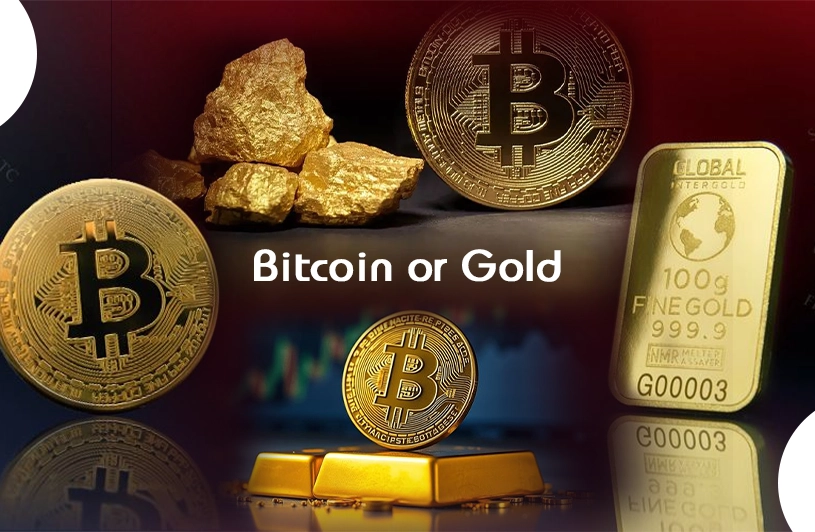
Gold and Bitcoin are often cited as safe-haven assets by people. These two assets have attracted strong investors from all over the world. However, each asset offers a unique way to protect your wealth.
In this guide, let’s explore the difference between Bitcoin vs gold to understand which is a better store of value.
Key Takeaways
- Gold continues to be the most trusted store of value due to stability, historical acceptance, and central bank support.
- Bitcoin offers higher growth potential but comes with significant volatility and regulatory uncertainty.
- Both assets can play complementary roles in portfolio diversification rather than replacing each other.
- The better store of value depends on risk tolerance, belief in digital finance, and investment horizon.
What is a Store of Value?
First, let’s understand what a store of value is. A store of value is something that keeps its worth over time, so you can save your wealth or money in it without losing purchasing power. In simple words, it is something you buy today but can still use in the future without it becoming worthless.
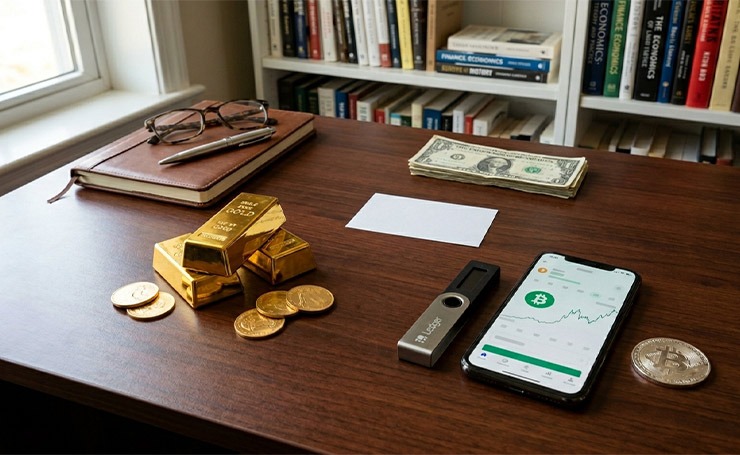
For instance, if you save cash, it can lose its worth in case of inflation. But if you invest in gold or Bitcoin, they may retain value or even increase in value, helping protect your wealth.
The main characteristics of a store of value are resilience, trust, and scarcity. So, why does store of value even matter? It matters because
- It protects savings from inflation.
- It is a hedge against currency debasement.
- It diversifies the investment portfolio.
- It is important to survive economic or geopolitical uncertainty.
Now that we have established what a store of value is, let’s compare gold and Bitcoin to see whether one is better than the other.
Origins and Historical Background

Gold
Gold has an extensive history of being used as a store of value. Before shifting to fiat currencies, gold was tied to economic stability. Even today, it is considered a valuable asset that holds worth in times of inflation and economic instability.
Bitcoin
Bitcoin emerged as a peer-to-peer decentralized currency during the global financial crisis. The introduction of blockchain technology further fueled Bitcoin’s popularity. Now, it has become “digital gold” due to its limited supply and potential long-term value.
Supply Dynamics and Scarcity

Gold
Gold is a non-renewable source, meaning it is naturally limited. More mining is resulting in its scarcity, and once it ends, it will not be replenished within a human lifespan. Currently, around 212,000 metric tons of gold have been mined throughout history. This limited supply makes it an extremely valuable asset.
Bitcoin
Bitcoin’s total supply is capped at 21 million coins. Due to Bitcoin halving, the rate at which new Bitcoins enter circulation is also reducing. This process increases its scarcity and has influenced Bitcoin’s value over time.
Inflation Hedge Capabilities

Gold
Fiat currencies lose their value over time due to excessive money printing or loose monetary policies. However, gold’s value rises when it happens, and it becomes a hedge against inflation.
Bitcoin
Bitcoin’s decentralized nature and limited supply make it an attractive asset for investors, particularly those worried about inflation amid the weakening of fiat currencies.
Price Volatility Comparison

Gold
Gold has a history of being stable during financial crises. It is also less volatile than Bitcoin. This is why it becomes important during economic uncertainty or when traditional currencies falter. For instance, gold prices increased during the 2008 financial crisis while other markets collapsed.
However, one thing to remember is that gold does not remain stable all the time. From 2012 to 2016, it lost 45% of its value. This shows that while it is a stable asset, it can also face declines.
Bitcoin
Bitcoin is considered highly volatile. For instance, it saw a substantial increase in value in 2021 (surged past $60,000), then faced sharp declines of over 50% in a short time. Despite its volatility, Bitcoin remains one of the fastest adopted financial assets.
Regulation

Gold
Gold markets are well-regulated across countries and are widely accepted. However, they are fragmented across geographies, which is the reason for price differentials between currencies.
Bitcoin
Bitcoin operates in a less regulated environment. This is why it faces some legal and compliance risks in many jurisdictions. It is also considered synonymous with the gray economy.
Portfolio Diversification
Gold
Gold is seen as a safe asset because its price usually does not fall as much as stocks during market declines, and sometimes it even moves in the opposite direction. This helps stabilize portfolios when equity markets fall. As it has lower volatility and long-term trust of people, it is suitable for wealth preservation and risk reduction.
Bitcoin
Bitcoin has a strong growth potential. It also offers exposure to the digital asset market. Although it is more volatile, its price movements can sometimes differ from those of traditional assets, which enhances diversification benefits. Investors often allocate a small portion of their money to Bitcoin to seek higher returns while keeping risk under control.
Utility
Gold
Gold is used in many industries, such as electronics and jewelry. Therefore, it has an intrinsic value beyond its investment appeal.
Bitcoin
Bitcoin is generally used for sending and receiving payments or for digital savings and investment. While it does not have any industrial usage, its importance is increasing as the world becomes more digital.
Tangible vs Digital

Gold
Gold is a tangible asset, which means it can be held and stored. This quality provides a sense of security to traditional investors.
Bitcoin
Bitcoin operates in an entirely digital environment and exists only on the blockchain. Its intangible quality attracts modern investors who are comfortable with digital assets.
Liquidity
Gold
Gold is highly liquid. You can spend or trade it super fast without it losing its value. There are also established markets and infrastructure for trading gold.
Bitcoin
Bitcoin is also highly liquid, especially on major crypto exchanges. However, its liquidity can change depending on market conditions and jurisdictions.
Portability and Divisibility

Gold
Moving gold is difficult because it involves high costs and risks. It requires proper storage and secure shipment. Moreover, dividing it into smaller units decreases its value or results in added fees. This is why gold is less practical for frequent or large-scale transfers.
Bitcoin
Bitcoin is entirely digital; therefore, it is easy to transfer anywhere in the world within minutes. It is highly portable as users can send and receive Bitcoin globally just with an internet connection.
Moreover, Bitcoin is highly divisible, down to 8 decimal places. Because of this, trading Bitcoin in even small amounts is easy. Bitcoin also has lower transaction costs than gold and is a more practical option for moving significant amounts of value.
Accessibility and Security
Gold
Physical gold needs to be stored securely because it can be lost or stolen. To protect it, people store gold in banks or use custodial services. You can also invest in gold through many financial systems, like ETFs or by buying bars or coins. It makes gold easily accessible.
Bitcoin
Bitcoin requires internet access and knowledge about blockchain, crypto wallets, and digital security. This may be less accessible for people who do not understand technology a lot. While blockchain remains secure, Bitcoin wallets are at risk of hacking and malware.
To counter it, many users rely on trusted crypto exchanges, cold storage, two-factor authentication, and insurance to protect their investments.
| Factor | Gold | Bitcoin |
| Origin / History | Used for thousands of years; tied to money & central banks | Created 2009; “digital gold” due to blockchain & scarcity |
| Supply / Scarcity | Finite, slowly mined (~212,000 tons) | Fixed 21M coins; halving reduces issuance |
| Inflation Hedge | Proven hedge; retains value during inflation | Potential hedge; shorter history, decentralized |
| Volatility | Low to moderate; rises in crises | Very high; rapid gains & losses common |
| Liquidity | Globally liquid: bars, coins, ETFs | Highly liquid on exchanges; depends on market & region |
| Portability / Divisibility | Hard to move; divisible with cost | Fully digital; easily transferable; divisible to 8 decimals |
| Utility | Jewelry, electronics, industrial | Digital payments & investment; no industrial use |
| Tangibility | Physical asset | Fully digital, blockchain-based |
| Regulation | Well-regulated globally | Emerging & evolving; legal uncertainty in some regions |
| Safe Haven | Historically stable in crises | Emerging; sometimes moves with risk assets |
| Portfolio Diversification | Low/negative correlation with stocks; stable | High growth potential; sometimes uncorrelated |
| Security and Storage | Requires secure vaults; low hacking risk | Blockchain-secured. Wallets and exchanges require cybersecurity |
| Adoption | Trusted by central banks & investors | Growing adoption; still emerging vs gold |
| Market Cap | Around $12–13T | Around $1T+ (varies with price) |
| Transaction and Portability | Slow, costly to move | Instant, borderless, low cost |
Future Outlook: Can Bitcoin Replace Gold?
The question of whether Bitcoin will replace gold depends on multiple evolving factors.
Bitcoin has gained extreme popularity due to its decentralization, fixed supply, and growing institutional adoption. Young people are more comfortable using digital assets and may prefer Bitcoin over traditional assets.

However, the biggest advantage of gold is thousands of years of trust, low volatility, and central bank reserves. During a financial crisis, gold acts as a defensive commodity. It also benefits from physical tangibility and global acceptance across developed and emerging markets.
In the future, Bitcoin may not necessarily replace gold. However, it will exist as a complementary store of value. As financial markets evolve, Bitcoin will cement its position as digital gold, and investors may allocate capital to both assets depending on risk tolerance, time horizon, and macroeconomic conditions.
Conclusion: Which Asset is the Better Store of Value?
Both Bitcoin and gold offer unique advantages as stores of value. But a better asset ultimately depends on an investor’s objectives.
Gold remains a proven wealth preservation asset. It is valued for its stability and credibility. Additionally, it is more suitable for traditional investors who look for downside protection and long-term purchasing power preservation.
On the other hand, Bitcoin is a high-risk, high-reward digital asset. Its scarcity, technological foundation, and potential for significant price appreciation make it attractive for investors who are willing to take volatility risk in pursuit of higher returns.
Learn more about Bitcoin and other cryptocurrencies by visiting The Crypto Trends.
FAQs
Is Bitcoin a Better Inflation Hedge Compared to Gold in the Long Term?
Bitcoin has shown strong price growth during certain periods of inflation. However, its price ups and downs make it less reliable than gold as a protection against inflation.
How much Bitcoin and Gold should Investors Allocate in a Diversified Portfolio?
Financial experts often suggest allocating 2 to 10% to alternative assets like Bitcoin or gold, depending on risk tolerance. Traditional investors may lean toward higher gold exposure, while aggressive investors may allocate more to Bitcoin.
Is Bitcoin Easier to Store than Physical Gold?
Bitcoin can be stored using digital wallets or cold storage devices. However, Bitcoin storage needs technical knowledge and cybersecurity precautions. On the other hand, gold storage involves physical security and insurance costs.
Will Bitcoin Volatility Decrease in the Future?
Many analysts believe that Bitcoin volatility may decline as the market develops and institutional participation increases. However, Bitcoin has a limited supply and speculative demand. This is why price swings may still remain higher than those of traditional assets.
